




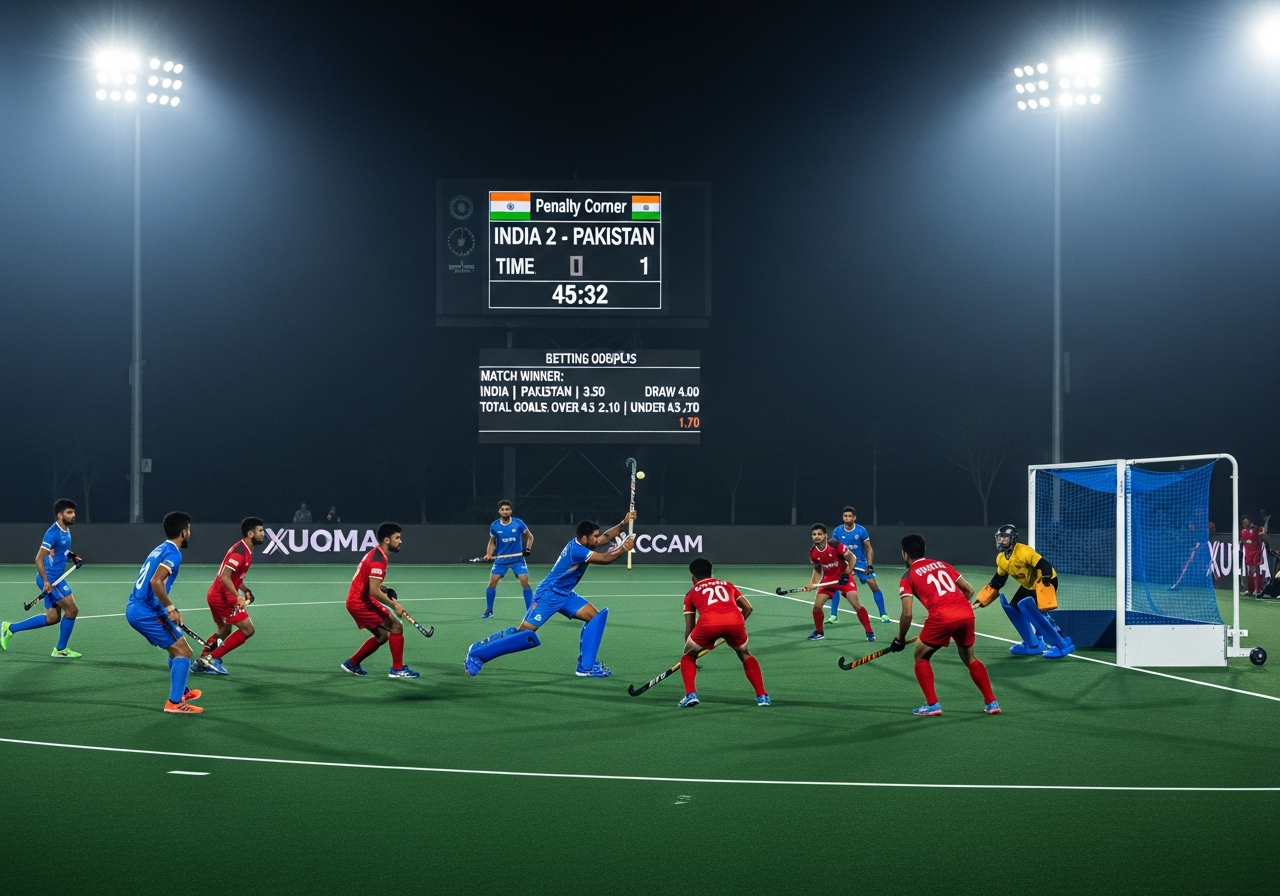
The Hockey India League’s resurrection marks an exciting chapter for Indian field hockey and its betting ecosystem. After a seven-year hiatus, HIL returned with renewed commercial backing, elite talent auctions, and elevated prize pools that have captured the attention of both traditional hockey enthusiasts and sports bettors across India. As the league continues to grow, so does the variety of betting markets available to Indian players—creating opportunities for informed wagering on one of India’s most strategically compelling sports.
This guide bridges your hockey knowledge with practical betting strategy, offering actionable insights into HIL markets, risk management and platform evaluation tailored specifically for Indian bettors. Whether you’re new to sports betting or an experienced player expanding into niche markets, you’ll find segmented approaches that match your experience level and help you navigate HIL’s unique dynamics.
Understanding Hockey India League Structure and Its Impact on Betting
The Hockey India League is an annual professional field hockey competition that resumed in 2023 after a seven-year gap, fundamentally reshaping the domestic hockey landscape. The league operates on a franchise model with team auctions, celebrity ownership and live broadcasting partnerships that have significantly increased match visibility and betting accessibility. The structure—featuring both men’s and women’s divisions, multiple rounds, and knockout stages—creates layered opportunities for different betting markets and player engagement styles.
HIL currently features six teams in both men’s and women’s categories, competing across a season that typically runs from December to February. The auction-based franchise model means squad composition changes annually, affecting player value, team form and odds. Teams compete in a round-robin format followed by semifinals and finals, with prize money reaching several crore rupees, amplifying stakeholder investment and media coverage. This regular, televised structure ensures consistent match volume and live betting opportunities throughout the season, making it ideal for disciplined Indian bettors seeking frequent, information-rich wagering windows.
Broadcasting through Sony Sports, DD Sports, Waves and YouTube ensures near-total match accessibility for Indian players, enabling both pre-match research and live in-play betting with reliable live commentary and statistics. This infrastructure reduces information asymmetry and allows Indian bettors to make timely, data-informed decisions during matches.
Men’s and Women’s HIL Formats Relevant to Bettors
The men’s and women’s HIL operate under identical rules but differ significantly in prize distribution, team budgets and media coverage, creating distinct market conditions. Men’s HIL attracts higher auction valuations, deeper international player participation and premium sponsorship, resulting in larger prize pools and sharper pre-match odds. Women’s HIL, while growing rapidly, typically has lower betting volumes, meaning odds can be less efficiently priced and present niche value opportunities for observant Indian players.
Market liquidity in men’s HIL is substantially higher, offering tighter spreads on standard markets like match winner and total goals. Women’s HIL matches, by contrast, may have fewer active bettors and wider bid-ask spreads, but also less algorithmic pruning of soft odds—creating genuine edge opportunities for bettors with solid form analysis. The scheduling differences mean men’s matches often occur under prime-time slots with larger TV audiences, while women’s matches may have more concentrated viewer bases, subtly affecting betting patterns and line movements.
Team budgets and squad depth vary across both divisions. Men’s teams typically field more international stars (boosting betting audience reach), while women’s teams blend emerging talent with experienced campaigners. This affects team consistency, injury vulnerability and scoring patterns—factors Indian bettors should weigh when choosing between pre-match and live betting.
Season Calendar, Venues and Broadcast Coverage
The HIL season typically begins in late December and concludes by mid-February, with matches scheduled across key venues including Chennai, Ranchi, Bengaluru and Delhi. A standard season involves eight to ten rounds of matches per team, ensuring Indian bettors have 60+ total matches to analyse and wager on throughout the season.
Key broadcast partners—Sony Sports (TV and streaming), DD Sports (free-to-air), Waves and YouTube—deliver live matches with Telugu, Tamil, Hindi and English commentary options. This multi-platform accessibility ensures real-time information flow, enabling Indian players to track scorelines, penalties, cards and substitutions during live betting windows. Matches typically begin at 7:00 PM IST on weekends, aligning with Indian prime-time viewing and maximising in-play betting engagement.
Understanding the season calendar is critical for tactical betting. Early-round matches often see uncertain odds due to limited form data, presenting value opportunities. Mid-season matches feature refined odds but also predictable patterns. Playoff matches generate sharp lines and volatile swings, rewarding agile bettors with deep tactical knowledge. Indian bettors should mark key phases: pre-season auctions (for squad intel), round-robin milestones and playoff legs in their betting calendars.
Core Hockey India League Betting Markets Explained
The primary betting markets in HIL span from straightforward match outcomes to advanced player-centric and outcome-combination wagers. Understanding the risk profile and typical use case for each market helps Indian bettors match their bankroll, experience and goals to appropriate options.
| Market type | Description | Risk level | Typical use case for Indian players |
|---|---|---|---|
| Match winner (1X2) | Back one team to win or select a draw | Low to medium | Beginner bets; strong team favourites or hedge positions |
| Next team to score | Predict which team scores first in live play | Medium | Mid-match entry during scoreless periods; exploits form runs |
| Correct score | Predict exact final score (e.g., 3-2) | High | Experienced players; leverages historical goal frequency and team patterns |
| Total goals over/under | Wager on combined goals exceeding or falling short of a line (e.g., O/U 3.5) | Medium | Balanced risk/reward; common in-play market; ties to team style and venue |
| Double chance | Back two outcomes (e.g., team win or draw) | Low | Risk-averse players; hedge favourite bets or reduce variance |
| Winning margin | Predict exact margin of victory (e.g., 1-goal win) | Medium-high | Advanced players; refines match winner bets with precision |
| Team total goals | Predict goals scored by one team only | High | Niche wagers; values attacking flair or defensive depth |
| Penalty corner conversion | Wager on success rate in penalty corners | Medium-high | Specialist knowledge bets; tied to team strength and live conditions |
| Handicap/line bets | Adjust for team strength (e.g., favourite -1 goal) | Medium | Balances uneven match-ups; improves odds on heavily favoured teams |
| Player prop (top scorer, POtM) | Back individual player for seasonal or match awards | Medium | Fan-driven bets on star Indian talent; auction value reflects odds |
Most Indian bettors begin with match winner and total goals markets—both widely available with tight odds and clear settlement criteria. As confidence grows, correct score and outcome-plus-total combinations offer higher returns but demand deeper form analysis. In-play markets like next team to score and penalty corner conversion suit tactical, real-time players who can read momentum shifts and substitution impacts.
Match Winner, Draw and Double Chance in HIL
The 1X2 market (team 1 wins, draw, team 2 wins) is the foundation of HIL betting. Odds reflect team strength, recent form, head-to-head records and home/away status. In HIL, draws are relatively uncommon due to the low-scoring nature of field hockey, making the 1X2 market often function more like a two-way bet in practice. However, knockout matches have higher draw probabilities, creating distinct odds adjustments.
Indian bettors seeking lower risk often employ double chance, backing “team A to win or draw.” This reduces odds—typically by 10-20%—but significantly improves win probability, especially in matches where form is uncertain or injuries affect team depth. For example, if a favourite is priced 1.80 to win straight, double chance might be 1.40. Over a season, disciplined use of double chance for marginal matchups outperforms over-confident match winner selections.
Odds shift based on points table position, recent wins/losses and betting volume. After a team suffers a heavy loss, odds often over-correct due to emotional betting, creating undervalue opportunities on recovery-minded opponents. Conversely, undefeated early-season runs inflate favourite odds beyond true strength, rewarding careful contrarian bets on upcoming challengers.
Advanced HIL Markets: Goals, Periods and Live Betting
Beyond basic outcomes, advanced markets tap into scoring patterns, match momentum and tactical nuance specific to field hockey. These markets suit intermediate and experienced Indian bettors comfortable with volatility and rapid decision-making.
- Over/Under Total Goals – The most traded advanced market. Typical lines range from 2.5 to 4.5 goals per match. Teams with strong attacking depth and drag-flickers (like Harmanpreet Singh for India) shift lines higher. Defensive, possession-focused teams lower totals. Indian bettors should track goal-scoring trends by venue: Chennai pitches favour fast-paced, open hockey; Ranchi tends toward tighter, tactical play.
- Correct Score Predictions – High variance, high reward. Typical outcomes in HIL: 2-1, 3-1, 2-2, 1-0. Bettors using season-long data on team scoring frequency and defensive records can identify mispriced scores. Example: if team A averages 2.3 goals and team B concedes 1.8 per match, a 2-1 score carries intrinsic likelihood; if quoted at 5.0+ odds, value exists.
- Outcome + Total Combinations – Merging match result and goals (e.g., “Home win and over 3.5 goals”). These offer superior odds but require precise forecasting. Useful for Indian bettors confident in team form and tactical setup; common pre-match strategy.
- Quarter/Half-Time Bets – Field hockey is divided into four quarters. Wagering on scores at the 15-minute and 30-minute marks isolates team momentum, endurance and tactical execution. Teams with strong starts often show fatigue in quarter 3 or 4, enabling tactical live bets.
- Penalty Corner Markets – HIL teams receive 5-12 penalty corners per match. Backing the number of penalty corners or conversion success ties directly to team style, opponent defence and umpiring patterns. High-value intel for specialist bettors.
- Live In-Play Momentum Bets – As matches unfold, line movement reflects real-time action. A team trailing 0-1 after 20 minutes may see match winner odds shift from 1.80 to 2.50. Savvy bettors capitalize on overreactions, entering bets at inflated odds when underlying performance data supports a stronger outlook.
Total Goals and Outcome/Total Combo Bets
Combining a match result with a total goals prediction creates precise, higher-odds wagers. For example, backing “Team A to win and total goals over 3” might yield 3.5 odds vs. 1.60 for a straight match winner. The downside is joint failure: both the result and goal count must align.
Successful combo betting hinges on realistic goal range forecasting. Analyse:
- Team attacking style: Does the team prioritize drag-flicks (higher volume, variable accuracy) or field plays (lower volume, higher conversion)?
- Opponent defensive record: Teams conceding 1.2 goals per match suggest under-lines; teams conceding 2.5+ suggest overs.
- Venue and pitch condition: Live pitch data (dry vs. damp) affects ball speed and goal frequency. Check weather reports before finalizing bets.
- Injury status: Loss of a marquee drag-flicker or centre-back significantly alters goal expectations.
A practical example: If two high-scoring teams with weak defences meet, over 3.5 is likely. Backing the favourite to win and over 3.5 together might pay 3.0 odds despite the individual components being reasonably probable. This is where Indian bettors with dataset discipline find edge against casual bettors.
Live HIL Betting Strategies for Indian Players
Live (in-play) hockey betting is uniquely profitable because field hockey’s pace generates frequent betting opportunities: nearly every penalty corner, card or substitution shifts momentum and odds.
Real-time signals for tactical entry:
- Yellow/Red Cards: A card against the opponent’s midfield engine triggers odds shifts (opponent suddenly odds-on, despite minutes remaining). If the carded player typically creates 1.5+ scoring opportunities per match, backing the trailing team suddenly offers value.
- Substitutions: A team removing a defender suggests attacking desperation (favourite at risk). Backing the trailing team after such a sub exploits knee-jerk market over-reactions.
- Penalty Corner Efficiency: After a team misses 2-3 consecutive penalty corners, bettors often panic-back the opponent. Statistically, conversion rates revert to team average; backing the struggling team offers hidden value.
- Fatigue Patterns: Field hockey shows clear fatigue drop in quarters 3-4. Teams dominating quarters 1-2 often fade, enabling contrarian live bets in later quarters at improved odds.
Bankroll discipline in live betting is critical. Set a unit limit per match (e.g., max 3 units per live entry) and stop trading after 2-3 in-play wagers per match, even if opportunities remain. Live odds move rapidly; overtrading leads to emotional, unplanned stakes that erode bankroll despite correct directional calls.
Use cash-out features strategically. If you backed over 2.5 goals pre-match at 1.70 and the match reaches 1-1 after 25 minutes with 35 minutes remaining, odds on your bet may now show 1.40-1.50 profit if you exit. Exiting 60% of your position locks profit while retaining 40% upside—a disciplined, expected-value approach.
Team and Player-Centric Markets in Hockey India League
Beyond match outcomes and goals, HIL markets reward bettors who track individual player performance and team-specific tendencies. These markets blend sentiment (fan favourites inflating prices) with genuine value opportunities (underrated players at inflated odds).
| Market | Team vs Player focus | Data needed | Example with Indian star | Upside for Indian bettors |
|---|---|---|---|---|
| Top scorer of the tournament | Player focus | Season-long goal frequency, role (forward vs. midfielder), fitness | Harmanpreet Singh (drag-flicker, high shot volume) | Auction price and retained status reveal bookmaker consensus; value exists in emerging juniors |
| Player of the match (PoTM) | Player focus | Weekly form, media narrative, team success correlation | A senior Indian forward after a marquee win | Post-auction narratives inflate odds; later-round matches see more balanced pricing |
| Most assists | Player focus | Playmaker role, team play style, offensive strategy | A midfielder orchestrating team attacks | Niche market with less efficient pricing; data-driven bettors identify value |
| Winning margin | Team focus | Team strength, goal-scoring consistency, defensive record | Favourites with dominant recent form | Tighter odds than match winner; refinement for confident bettors |
| Team total goals | Team focus | Attack quality, opponent defence, venue history | High-scoring Indian teams (e.g., strong batting depth) | High variance; rewards attack-pattern specialists with strong data |
| Penalty corners won | Team focus | Tactical pressing, midfield control, opponent discipline | Teams with aggressive press-and-win strategies | Specialist market; bookmaker lines often soft due to low volume |
| Cards in the match | Team focus or player focus | Team discipline, referee patterns, aggression tendencies | Volatile; reflects match intensity rather than pre-game data | Risky; useful as hedge or volatility play only |
| Correct score | Team focus | Goal-scoring frequency, defensive record, head-to-head history | Balanced teams with consistent patterns | High variance but highest-odds opportunities; requires dataset discipline |
Betting on Indian Star Players and Emerging Talents
Prominent Indian HIL stars—Harmanpreet Singh, Manpreet Singh, Sreejesh (goalkeeper), Lalremsiami (women’s)—command auction premiums, inflating their PoTM and top-scorer odds. Bettors must distinguish between “likely to perform well” (already priced fairly) and “likely to score above odds” (true value).
A strategic approach:
- Track auction valuations: If a player is retained at 1.2 crore, odds on them for PoTM should reflect that premium status. If odds don’t reflect auction price—e.g., a 90 lakh player priced like a 50 lakh player—opportunity exists.
- Monitor media narrative bias: After India’s media covers a player’s heroics in one match, odds on that player for the next match often over-correct upward. A player who scored a match-winner vs. mid-table team sees inflated PoTM odds vs. stronger opposition next week. Backing contrarian picks (the teammate who created the assist, for example) exploits this bias.
- Watch emerging talent: Junior Indian players, once selected for HIL, see rapid odds adjustments as the betting market learns their true form. A promising young drag-flicker priced at 4.0 odds to score 2+ goals in week 2 may be 2.5 by week 5 after delivering. Early-season bets on emerging talent, backed by pre-season tournament data, yield edge.
- Avoid fan bias: Fan-favourite Indian players often see 10-20% odds inflation due to local betting volume. If Harmanpreet Singh is backed 25% heavier than his historical PoTM win rate suggests, backing his teammates during matches where he’s heavily favourited exploits asymmetry.
Evaluating Licensed HIL Betting Sites for Indian Players
Selecting a safe, licensed platform is foundational. Unlicensed bookies offer higher odds but zero recourse; licensed operators in Curacao, Malta and UK jurisdictions provide regulatory oversight, responsible gambling tools and settlement certainty.
- Verify licensing documentation – Check the operator’s footer for regulatory seals (Curacao Gaming Commission, Malta Gaming Authority, UKGC). Cross-reference on the regulator’s official website; many unlicensed sites fake seals.
- Confirm HIL market coverage – Log in as a guest or trial user and check that major HIL markets (match winner, over/under, correct score) are live for upcoming matches. Niche operators may offer HIL but with limited depth; choose platforms with 10+ markets per match.
- Assess odds competitiveness – Compare match winner odds for an upcoming HIL match across 3-4 licensed platforms. Differences of 0.05-0.10 in odds signal competitive markets; larger gaps indicate softer pricing opportunities.
- Test withdrawal process – Before major wagers, execute a small withdrawal to verify that claimed payment methods (UPI, NetBanking, bank transfers) work seamlessly. Check stated withdrawal timelines; avoid sites claiming “instant” payouts without explicit conditions.
- Review responsible gambling tools – Licensed operators offer deposit limits, loss limits, self-exclusion and cooling-off periods. Absence of these tools is a red flag. Use deposit limits to cap monthly HIL betting spend automatically.
- Read terms & conditions clarity – Legitimate sites explain odds changes, settlement criteria for edge cases (e.g., match abandoned mid-play), and bonus rollover requirements in plain language. Vague T&Cs suggest the operator isn’t transparent.
- Check customer support responsiveness – Email the support team a non-urgent HIL question and assess response time (within 24 hours is baseline). Poor support suggests an operator unlikely to resolve disputes fairly.
Checklist for Safe HIL Betting Platforms in India
A concise verification framework for Indian bettors:
- Licensing: Confirmed on regulator’s official website (not self-declared).
- KYC (Know Your Customer): Site requests identity proof, address and bank details; avoid sites with lax verification.
- Responsible gambling tools: Deposit/loss limits, self-exclusion option and reality checks visible in account settings.
- HIL coverage: At least 8 markets per match; live odds updates every 10-30 seconds during play.
- Competitive odds: Within 0.05 of rival licensed platforms for major markets.
- Indian payment options: UPI, NetBanking, card deposits and withdrawals processed within 2-4 business days.
- Security: HTTPS encryption, two-factor authentication (2FA) for account access.
Red Flags: Unlicensed Bookies and Technical Traps
Avoid operators displaying:
- Unrealistic promotions: Bonuses offering 200%+ match or zero rollover requirements. Legitimate operators use 3-8x rollover; anything softer suggests the site is baiting high-volume depositors into losing positions.
- Opaque settlement rules: Buried terms stating “goals in extra time don’t count” or “penalty-corner-only matches settled differently.” Legitimate sites publish settlement standards upfront.
- Poor odds for popular markets: If match winner odds are 1.40 / 2.80 (heavily skewed), the operator is either protecting itself via soft lines or isn’t attracting enough bettors. Either way, you’re getting poor value.
- Delayed payouts: Sites claiming “processing within 48 hours” but taking weeks signal cash-flow or operational issues. Licensed operators settle within 2-4 days consistently.
- No phone/live chat support: Legitimate operators offer 24/7 chat or phone support; email-only support with slow response suggests disinterest in customer issues.
- Unregistered domain or no address listed: Check the site’s WHOIS record and footer. Legitimate operators list a jurisdiction, office address and licence number. Anonymity is a red flag.
Using HIL Data: Points Table, Form and Squads for Smarter Bets
Official HIL data—points tables, fixture schedules, match results and squad lists—are public via the Hockey India website and league app. Bettors who systematically analyse this data uncover form trends and value mismatches that casual bettors miss.
| Data source | What it shows | How to use in betting | Risk if ignored |
|---|---|---|---|
| Points table (live standings) | Wins, losses, draws, goal difference, recent form | Identify teams on multi-game runs (overvalued) or in slumps (undervalued); compare goal difference to goal volume for defensive/offensive insights | Betting on rankings without considering momentum; misses mid-season shifts |
| Head-to-head records | Historical matchups between specific teams | Exploit tactical matchups (e.g., team A always defeats team B due to style); adjust odds based on patterns | Ignoring recent changes; past H2H can mislead if squad composition has shifted |
| Squad lists and auction outcomes | Player names, auction prices, retained status, roles | Assess team depth and marquee player availability; high-priced players inflate odds if overrated; low-priced emerging talent offers value | Guessing team strength without knowing actual squad; missing injury/retention changes |
| Goal-scoring leaders (individual) | Top scorers’ goal frequency, average per match | Back high scorers for goal props; assess team attacking quality via total scorer goals | Betting goal totals without knowing top scorer’s current form or fitness |
| Fixture calendar and venue data | Match dates, venues, home/away splits | Identify home-field advantage patterns by venue; adjust lines for travel fatigue in back-to-back away matches | Treating all venues equally; missing venue-specific pitch and weather effects |
| Recent results and margins | Wins/losses and goal margins over past 5 games | Detect momentum: teams on 3+ win streaks often see odds over-corrected upward; trailing teams can revert to form | Relying on single outcome rather than trajectory; misses regression signals |
Interpreting HIL Points Table and Results for Value
The points table alone—seven-column ranking—masks analytical depth. Move beyond rankings to extract edge:
Goal Difference Insights: A team with 15 points and +5 goal difference (goals for minus goals against) versus a rival with 15 points and -2 goal difference face identical odds in many markets, yet the first team is systematically outperforming. Their odds to win should be tighter; if not, back them.
Recent Form Micro-Trends: The table shows overall record, but recent form isolates current condition. A team with 3 wins in last 5 matches after a slow start represents a different betting value than a team with 8 wins in 12 matches but just 1 win in last 5. Bettors who segregate form by rolling 5-game windows identify inflated favourites (teams coasting on early-season form) and hidden value underdogs (late bloomers).
Home/Away Splits: Extract team results by venue. Some teams win 70% of home matches but only 30% away. If such a team plays away and is priced as 1.60 favourite overall, a 2.00+ away underdog offers true value. The league website often breaks this down; if not, manually track it across 3-4 weeks to build a dataset.
Goal Scoring Efficiency: Divide total goals scored by number of matches played. Does the team score consistently (1.8 ± 0.3 per match) or erratically (1.2, 0.6, 3.1, 2.2)? Consistency enables confident total goals markets; volatility suggests higher risk on over/under bets.
Bankroll Management and Responsible HIL Betting in India
Long-term HIL betting success hinges on disciplined bankroll management and respecting personal and legal boundaries. Many Indian bettors treat HIL as entertainment and lose sight of expected value. Systematic staking ensures profitability or, at minimum, sustainable losses.
- Set a monthly budget: Decide how much of discretionary income you allocate to HIL betting (e.g., ₹5,000–₹20,000 per month). Treat this as entertainment spend; never wager money needed for bills, dependents or emergencies.
- Use unit-based staking: Define one “unit” as 1-2% of your monthly budget. If your budget is ₹10,000, one unit = ₹100–₹200. Stake most bets at 1-2 units; reserve 3+ unit bets only for very high-confidence calls (3+ positive factors aligned).
- Track all bets in a spreadsheet: Record match date, market, odds, stake, result and profit/loss. Review weekly to identify biases (e.g., you consistently overvalue underdogs; you chase losses after bad runs).
- Avoid chasing losses: If you lose ₹2,000 in a week, do not try to “win it back” by increasing stakes. Return to base staking the following week. Emotional betting during downswings has negative expected value.
- Use cash-out strategically: If a pre-match bet is losing 30 minutes into live play, cashing out half your stake locks a loss and retains upside. Don’t cash out every bet; reserve it for bad luck scenarios, not fundamental forecast errors.
- Set win targets and loss limits per session: Decide in advance: “If I win ₹3,000 in today’s matches, I stop betting today,” and “If I lose ₹1,000, I stop.” Hitting either target means you exit, preventing overconfidence or tilt-driven decisions.
Staking Plans for High-Variance Hockey Markets
Different staking approaches suit different markets:
Flat Staking – Bet the same unit (e.g., 1 unit) on every bet, regardless of odds or confidence. Pros: simple, no overextension. Cons: ignores bet quality; doesn’t maximize wins on high-confidence calls. Best for beginners establishing discipline.
Percentage Staking – Stake a fixed percentage of bankroll on each bet (e.g., 2%). If bankroll is ₹10,000, each bet is ₹200; as bankroll grows, stakes grow proportionally. Pros: protects bankroll during downswings; scales upward as you succeed. Cons: requires frequent recalculation. Best for intermediate players building long-term edges.
Kelly Criterion Adaptation – Advanced bettors use Kelly formula (stake % = (odds × probability – 1) / (odds – 1)) to maximize long-term growth. However, field hockey’s high variance warrants conservative Kelly (stake 25-50% of Kelly recommendation). Pros: mathematically optimal long-term growth. Cons: complex; requires accurate probability estimation. Only for experienced bettors with validated prediction models.
Confidence-Based Staking – Vary stakes by confidence: 1 unit for moderate-confidence bets (single factor), 2 units for high-confidence (3+ factors aligned), 3 units for very high-confidence (strong form, data + injury intel + tactical edge). Pros: emphasizes conviction without over-complicating math. Cons: requires discipline; overconfidence leads to overextension. Best for experienced bettors with sound judgment.
For HIL’s volatility, a hybrid approach works well: flat 1-unit base for all bets, plus 0.5-unit increments for each additional high-confidence factor (form + data + tactical). This caps reckless bets while rewarding research.
Legal and Personal Risk Considerations for Indian Players
Online betting’s legal status in India varies by state. While central law doesn’t explicitly prohibit online betting, several states classify it as gambling and restrict it. Before betting, check your state’s specific regulations or consult a legal advisor. Many Indian bettors use licensed offshore platforms (Curacao, Malta) which operate in a grey zone—legal from the user’s perspective if you’re not breaking local state laws, but operationally risky if your state prosecutes players.
Regardless of legal nuance, establish personal boundaries:
- Age and eligibility: You must be 18+ and a resident of a jurisdiction not explicitly prohibiting online betting. Do not provide false identity information.
- No borrowing to bet: Never borrow money from friends, family or credit providers to fund HIL betting. Borrowed money creates obligation and emotional pressure that distorts decision-making.
- Separate accounts and tracking: Use one betting account for HIL and track it separately from income/savings. This isolation prevents “justifying” losses as sunk into necessary spending.
- Self-exclusion if struggling: If you find yourself betting more than planned, losing sleep over bets, or neglecting responsibilities, use self-exclusion tools immediately. Licensed platforms allow you to freeze accounts for days/months/years. Use them without shame.
- Communicate with family: If you have dependents, maintain transparency about your betting activity and budget to avoid trust issues or financial strain.
Practical HIL Betting Scenarios and Example Strategies
Real-world scenarios illustrate how to apply markets, data and bankroll discipline together into actionable day-to-day betting decisions.
| Scenario | Chosen market | Pros | Cons | Suitable for |
|---|---|---|---|---|
| Heavily favoured team (1.40 odds) early season with limited form data | Double chance (team or draw) at 1.15 or straight match winner hedge via a modest stake | Reduces variance of under-researched call; double chance still profits at 1.15 if team underperforms | Accepts lower odds; if team wins decisively, lower ROI than unhedged winner bet | Beginner; risk-averse players |
| Underdog team (2.50+) after heavy prior loss but strong underlying stats (goal difference, H2H record) | Straight match winner at 2.50+ or handicap bet (e.g., +1 goal start) | High value if true probability is 40%+ despite emotional market over-correction; handicap improves odds further | High variance; underdog bet loses if team loses again; requires conviction | Intermediate; data-driven players |
| Indian star player (e.g., Harmanpreet) heavily bet on for PoTM (odds 2.0) vs. balanced team and good form | Back a teammate (typically 4.0+ odds) or avoid player props altogether; focus on match winner, total goals | Exploits overvalued sentiment; teammate may assist 2+ goals and win PoTM; match-level bets have faster settlement | High variance if backing niche player; requires confidence in teammate’s form | Intermediate to advanced; narrative-aware players |
| Two high-scoring teams with weak defences (averaging 2.5+ goals per match each) meeting | Outcome + total combo: favoured team to win and over 3.5 goals (e.g., 3.0 odds) or simple over 3.5 at 1.70 | Strong form data supports prediction; combo bets pay better than single outcome; over market usually tight | Requires both components; over-correction by market is rare due to popularity; high variance | Beginner to intermediate; form-focused players |
| Live: defending team just received red card with 20 minutes remaining | Back attacking team to win at 1.30-1.50 (inflated from pre-match 1.60) in-play or next team to score at 1.40 | Situational edge: numerical advantage drives goal probability upward; market may lag on odds adjustment | Can reverse quickly if second goal is scored; opposite team may score on counterattack first | Advanced; opportunistic in-play traders |
Building a Sample HIL Matchday Betting Card
Construct a risk-balanced betting plan for a matchday featuring two matches: Match A (Strong Team A vs. Weak Team B) and Match B (Balanced Team C vs. Team D).
Match A Analysis: Team A is undefeated with +8 goal difference; Team B has just 1 win in 5 matches. Match winner odds: Team A 1.50. Total goals line: over 3.5 at 1.80, under 2.5 at 2.10. Context: Team A plays at home; Team B’s defence is porous.
Allocation for Match A (₹500 budget, ₹100 per unit):
- 2 units (₹200) on Team A to win at 1.50 = ₹300 profit if wins. Rationale: strong form + home advantage warrant full backing despite modest odds.
- 1 unit (₹100) on over 3.5 goals at 1.80 = ₹80 profit if wins. Rationale: Team A’s attack + Team B’s weak defence suggest high-scoring environment. Under-sized stake hedges overextension on favourite-heavy card.
Match B Analysis: Teams C and D are similarly ranked; recent form is mixed for both. Match winner odds: 1.90 each way (bet C at 1.90, draw 3.50). Total goals: over/under 2.5, both at 1.85. Context: neutral venue; injury uncertainty on both sides.
Allocation for Match B (₹300 budget, ₹100 per unit):
- 1.5 units (₹150) on Draw at 3.50 = ₹375 profit if draw. Rationale: evenly matched teams + neutral venue suggest draw is underpriced vs. single-team outcomes. Smaller stake reflects higher variance.
- 0.5 units (₹50) on under 2.5 goals at 1.85 = ₹42.50 profit if under. Rationale: cautious bet hedging the draw assumption; if match is tight, low-scoring aligns with a draw.
Total Daily Stake: ₹800 across three bets. Expected value if all hit: ₹797.50 profit (99.7% ROI). Downside protection: Diversified across two matches and multiple markets; no single bet exceeds 2.5 units; under-staking Match B reflects lower conviction.
Post-match review: After results settle, log outcomes in your tracking spreadsheet. Did Team A win? Did the draw hit? Assess whether your form analysis was sound or if external factors (injury news, ref decisions) masked true odds. Use this feedback to refine next week’s card.
This structured approach—allocating stakes by conviction, diversifying markets, tracking results—separates disciplined bettors from casual players. Over a season of 60+ matches, this discipline compounds into measurable edge and sustainable profit.